Last updated: August 10, 2025
Electric vehicles have unique detailing requirements that most shops ignore. Here's what's different and why it matters for your Tesla, Rivian, Lucid, or any other EV.
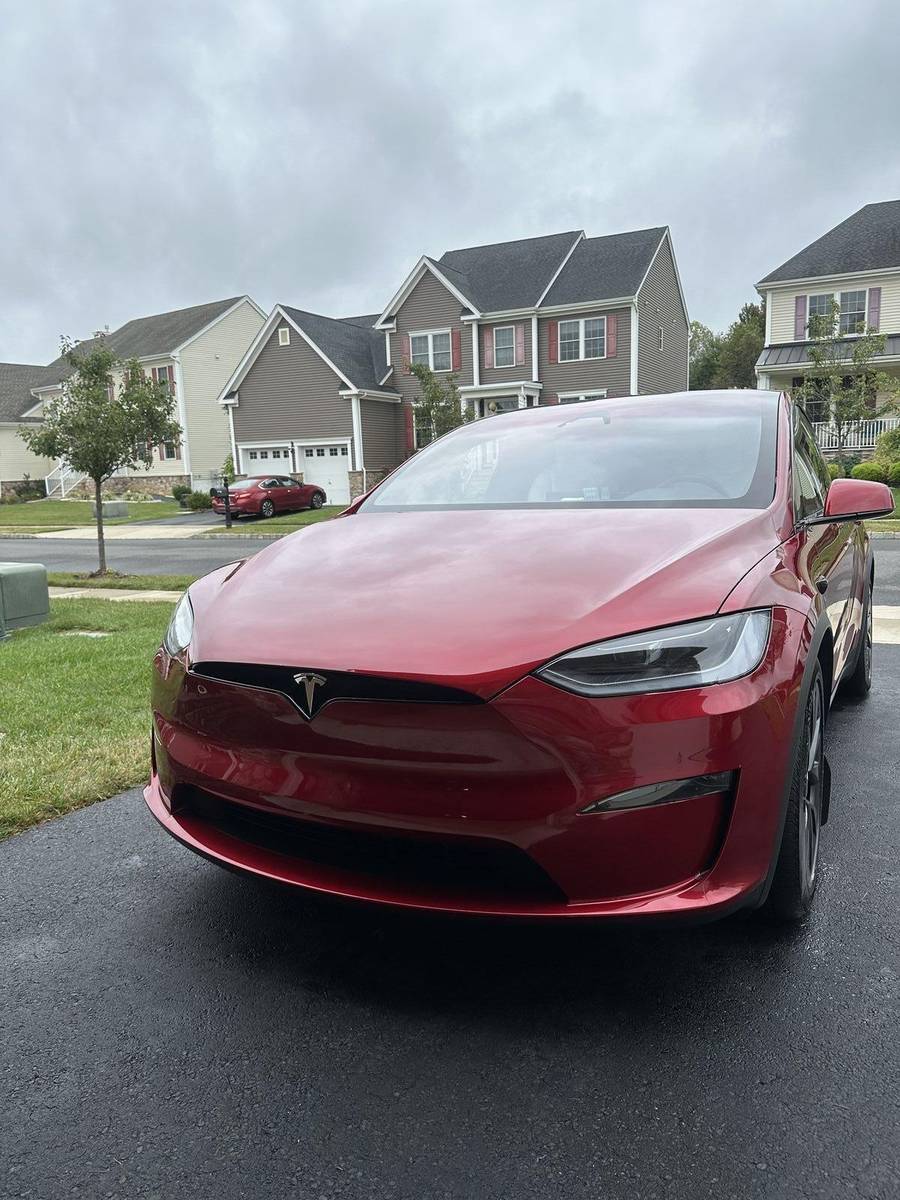
Tesla paint is notoriously thin and soft — especially on Model 3 and Model Y. It shows swirl marks and scratches more easily than traditional automakers. Paint correction must be done carefully with paint thickness measurements on every panel before any machine polishing begins.
Tesla's synthetic leather requires pH-balanced cleaners — not the same products used on traditional leather. Harsh chemicals break down the coating and cause cracking and peeling. We use dedicated synthetic leather cleaners followed by UV protectant to prevent fading.
The panoramic glass roof on Model 3, Model Y, and Model X attracts water spots and mineral deposits. Standard glass cleaners leave streaks. We use a dedicated glass polish followed by ceramic glass coating that creates a hydrophobic barrier and prevents future spotting.
EVs have cameras, radar, and ultrasonic sensors across the body that must be cleaned carefully. High-pressure water directly on sensor housings can cause damage. Our wash process accounts for every sensor location on your specific model.
The stainless steel body requires completely different products than painted vehicles. Standard polish and wax don't apply. We use stainless-specific cleaners and metal ceramic coatings formulated for bare steel. Learn more on our Cybertruck detailing page.
See our Tesla & EV detailing service or get a quote.
Tesla's factory finish is thin and soft by industry standards, and the two facts together define the whole approach. Soft means defects come out with surprisingly little effort — a finishing compound and soft pad clears marring that would need a heavy cut on a BMW. Thin means there is very little clear coat left to give if someone treats it aggressively.
The practical consequence is that a Tesla should be measured before it is corrected, and corrected once, properly, rather than repeatedly. A car that has been machine-polished three times by three different people is a car with a real risk of clear-coat failure, and no amount of coating over the top fixes that.
Tesla panel gaps hold more water than a tighter-tolerance car, and it runs out ten minutes after you think you have finished drying — down the door, across a clean rocker, leaving a streak. A filtered blower through the shuts, mirror housings and the charge-port recess solves it in under a minute.
The charge port itself deserves specific care: it is a recess that collects road salt in winter and holds moisture after a wash. Blow it dry, keep pressure washers away from the connector, and do not spray cleaner directly into it. On cars that charge outdoors daily, this is the area that ages worst.
A Model 3 or Y doing rideshare work is a commercial vehicle, and the maintenance interval that suits a private owner is wrong for it. The cabin takes daily use from strangers, and the paint accumulates bonded film at three or four times the rate of a commuter car.
Realistically that means interior extraction on a fixed monthly schedule rather than when it looks bad, and a decontamination wash roughly quarterly. A coating pays for itself faster on a rideshare Tesla than on almost any other car, purely because it cuts the time each wash takes and stops contamination bonding between them.
On soft, thin Tesla paint, a coating does two useful things: it adds a sacrificial layer harder than the clear coat underneath, and it makes contamination release rather than bond. On a street-parked Tesla under trees or an elevated line, that is the difference between quarterly correction and none.
What it does not do is make the paint chip-resistant, survive brush washes, or excuse leaving droppings on the surface for a week in July. Coatings resist chemical attack and make cleaning safer; they do not stop physical damage. Anyone promising otherwise is selling something.
NYC Detailing Prices 2026 · Coating vs PPF · Best Paint Protection · Winter Car Care · How Often to Detail
BMW Detailing · Mercedes Detailing · Porsche Detailing · Exotic Cars
Ready to protect your vehicle? Get a free quote or call us at (808) 556-7589.
Tell us about your vehicle and we'll send a firm price. No pressure, no estimate drift.
We'll reply with your fixed quote within the hour during business hours. For immediate help, call (808) 556-7589.